FREP vs Stainless Steel Joist Hangers: Comparing Cost and Performance
July 31, 2026
Stainless steel has long been the preferred choice for joist hangers in coastal environments and applications involving preservative-treated timber. Its durability and corrosion resistance are well understood, making it a common specification choice for outdoor timber structures.
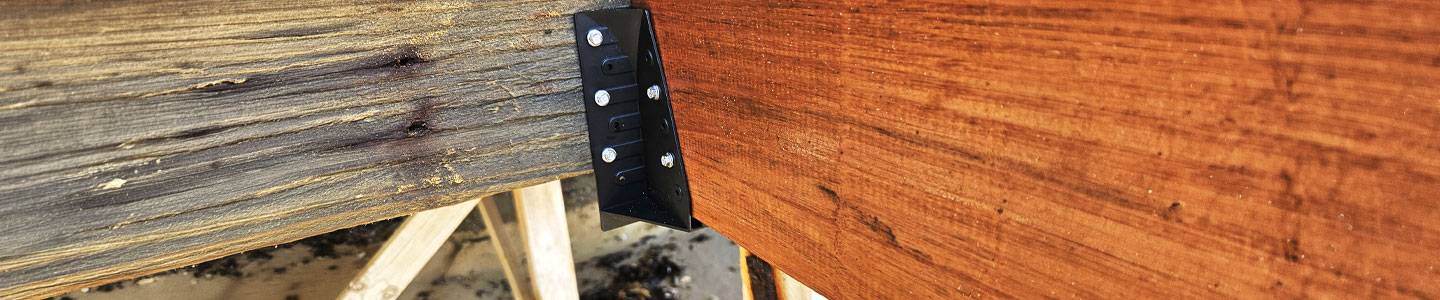
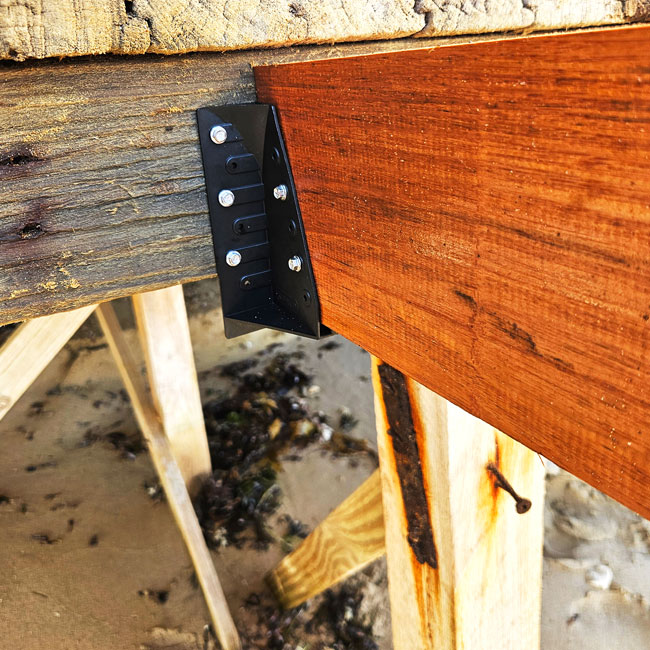
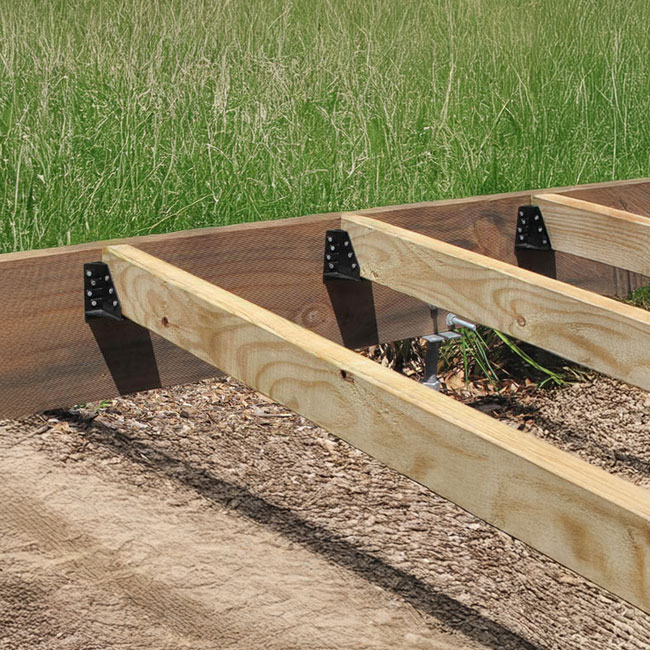
Fibre Reinforced Engineered Polymer (FREP) joist hangers offer an alternative approach. As a non-metallic connector, FREP does not rust, corrode or react with modern timber treatments. In many applications, both FREP and stainless steel can provide the level of durability required, which raises an important question: when is stainless steel necessary, and when might FREP be a more cost-effective option?
FREP vs Stainless Steel at a Glance
| Feature | FREP | Stainless Steel |
|---|---|---|
| Corrosion resistance | Will not rust or corrode | Excellent corrosion resistance |
| Galvanic reaction | Not applicable | Can occur with dissimilar metals |
| Compatibility with treated timber | Unaffected by ACQ and CCA treatments | Suitable when correctly specified |
| Coastal environments | Suitable | Suitable |
| Maintenance requirements | Minimal | Minimal |
| Weight | Lightweight | Heavier |
| Typical material cost | Generally lower | Generally higher |
When Cost Becomes a Consideration
Connector selection should always start with structural and durability requirements. If a project requires corrosion resistance because of moisture exposure, salt air or treated timber, the chosen connector must be capable of performing in those conditions.
Where both FREP and stainless steel are suitable, project cost may become a factor.
In many residential and light commercial applications, FREP hangers are available at a lower material cost than comparable stainless steel alternatives. On small projects the difference may be modest. On larger decks, boardwalks or structures requiring a high number of connectors, the cost difference can become more noticeable.
This does not mean stainless steel is over-specified or unnecessary. Rather, it highlights the importance of evaluating whether the additional cost delivers a practical benefit for the application.
Installation and Site Handling
Material differences can also affect installation.
FREP hangers are generally lighter than stainless steel equivalents, making them easier to transport and handle on site. They are also unaffected by scratches or coating damage because corrosion protection is not dependent on a metallic surface treatment.
While these factors are unlikely to drive product selection on their own, they may contribute to installation efficiency, particularly on larger projects.
When Stainless Steel May Still Be Preferred
Stainless steel remains the logical choice in many circumstances, including:
- Projects where stainless steel hardware is specified
- Structures requiring consistency with existing stainless steel components
- Applications where metallic connectors are required by design
- Situations where the required connector type or load capacity is not available in the FREP range
Its long history of use and widespread acceptance continue to make it the default choice for many designers and builders.
Conclusion
For many outdoor timber applications, both FREP and stainless steel provide effective corrosion-resistant solutions.
The key difference is often not durability, but cost. Where both materials satisfy the performance requirements of a project, FREP can provide a corrosion-resistant alternative at a lower material cost than comparable stainless steel connectors.
As with any engineering decision, connector selection should be based on structural requirements, environmental exposure and project budget. Understanding the strengths of both materials allows designers and builders to choose the solution that best fits the application.
Structural Connections

Unmatched Quality from the Truss to the Foundation
With nearly 60 years of field and R&D experience, Simpson Strong-Tie® timber connectors are manufactured to the industry's highest standards. From framing angles to straps to heavy-duty joist hangers, we offer the most diverse product line so that you have the right product for the job.
Simpson Strong-Tie® connectors offer unmatched quality with laboratory and field testing, and are backed by our uncompromising commitment to customer service. As the company that built the connector industry, you can count on Simpson Strong-Tie® to work closely with builders, engineers and building officials to deliver innovative, building code-compliant solutions to help build safer, stronger structures economically. Download the Timber Connectors NZS 3604 Catalogue.
Timber Connectors
From testing to service to availability, everything we do is engineered to ensure your project's success. With every product, you know you are getting the quality, value, service and on-time delivery that we have built our reputation on for the past 60 years.
From straps and ties to joist hangers and much more, Simpson Strong-Tie® structural connectors increase the strength and safety of timber-frame structures. Each connector is unique to Simpson Strong-Tie and is designed for specific applications without the need to adapt metal plating to suit a connection. Download the Engineered Structural Connectoions flyer.
Steel Frame Connectors
From fully tested and engineered connectors and clips Simpson Strong-Tie® provides comprehensive structural solutions for cold-formed steel construction. From steel-to-steel connections to full-scale lateral solutions and curtain wall connectors, we remain committed to developing new technology that helps to advance the cold-formed steel industry.
Find out how Simpson Strong-Tie timber connectors can help you build the right way every day. Download the Cold-Fromed Steel Construction Connectors Catalogue.